Prompt Engineering Resources
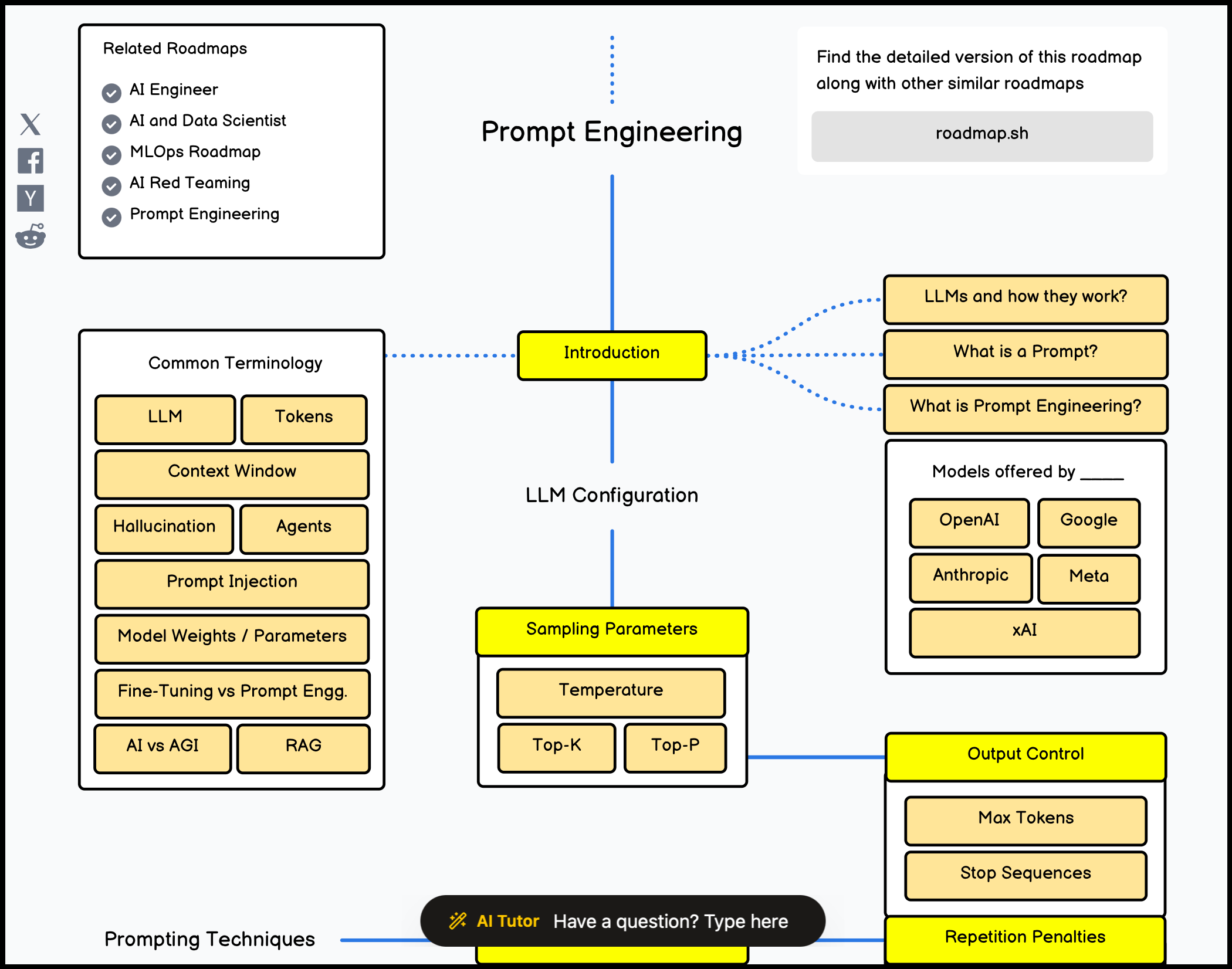
"Prompt Engineering Roadmap"
https://roadmap.sh/prompt-engineering
Why this is the starting point:
If you want a direction to go in to start learning Prompt Engineering for your career in AI, this is a good roadmap, complete with small explanations of each topic.
That said, you'll need to do your own deep dive in each topic, and practice it yourself.
Although, the roadmap is still useful since it helps give you context on vocabulary that is used in the guides and practices.
My suggestion would be to keep the roadmap open as you go through the guides.
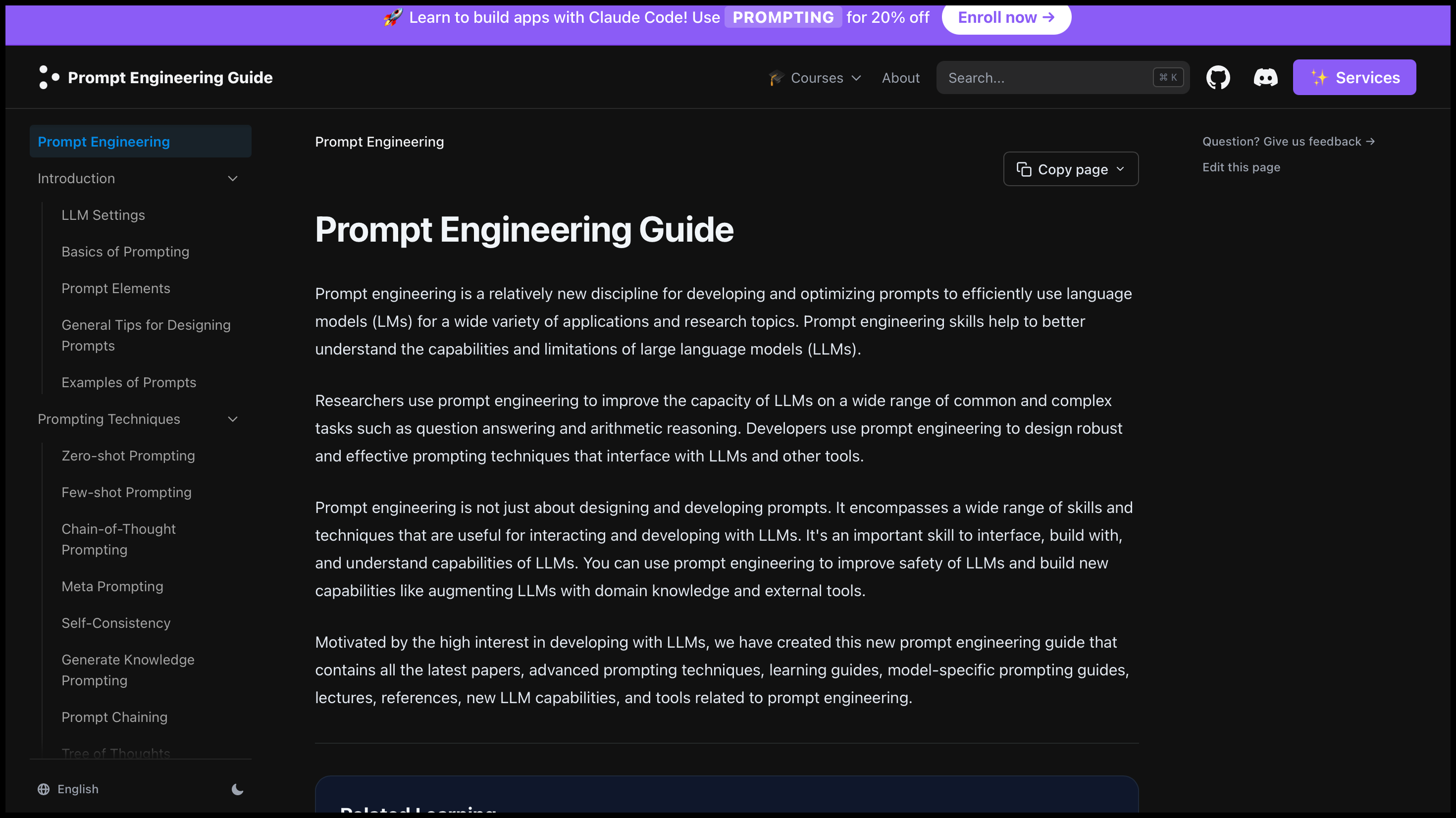
"Prompt Engineering Guide" by Nextra
https://www.promptingguide.ai/
Why this is a good source:
A free guide that will hold your hand and take you on a journey to learn basic prompting techniques.
Has both simple to complex techniques for understanding how to craft good prompts to help you get better outputs.
This is my go-to guide to get started with prompt engineering.
It also gives you a walkthrough on different models, what’s under the hood, their strengths and how to prompt effectively.
It’s not an understatement to say that if you understand the content in this guide and practice it, you'll be a prompt engineering expert in the end.
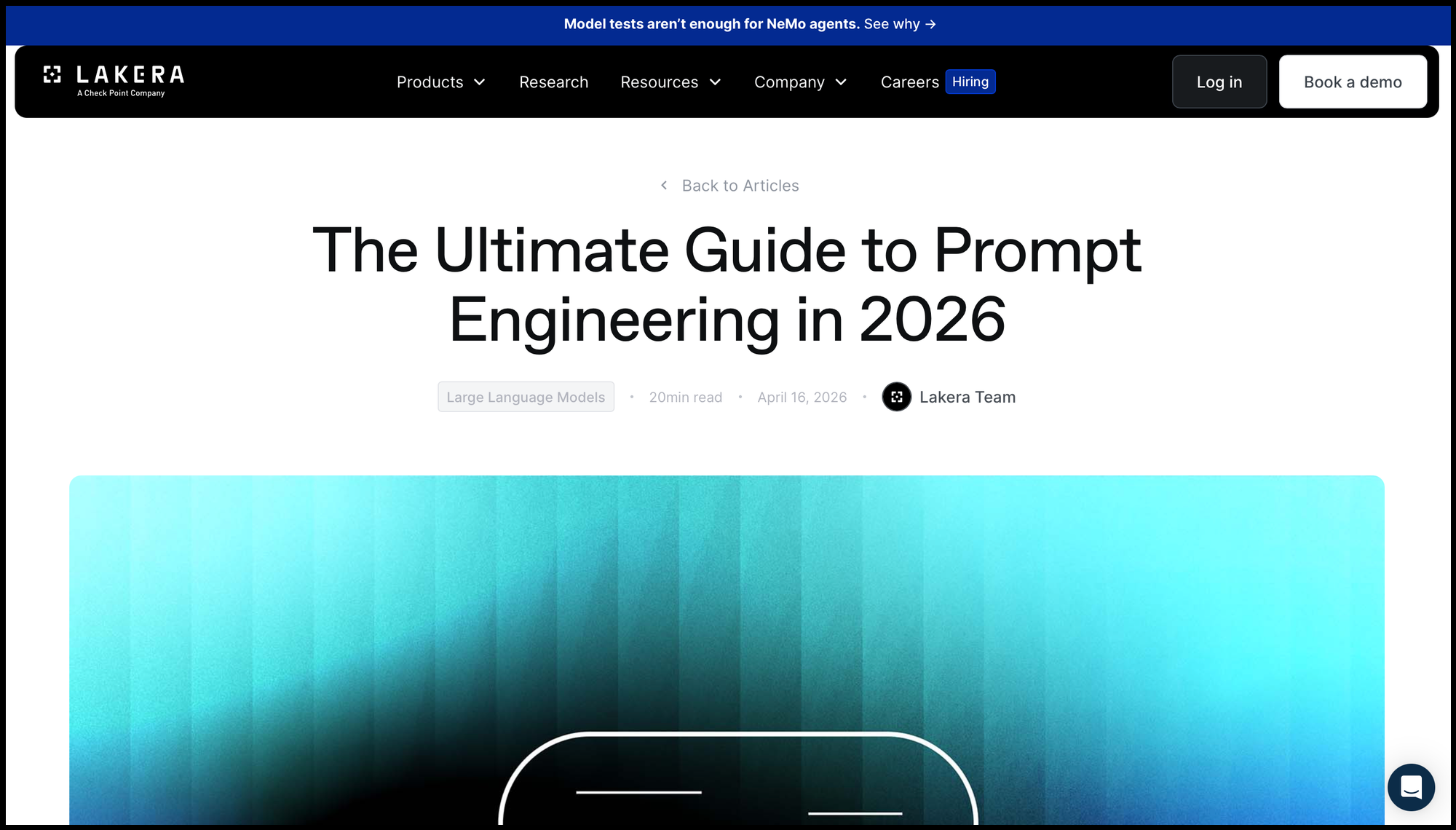
"The Ultimate Guide to Prompt Engineering in 2026" by Lakera AI
https://www.lakera.ai/blog/prompt-engineering-guide
For more specific knowledge:
Also a free guide, this one is less detailed than the previous guide.
However, this guide gives more focused information that will help you get hired quickly & helps you implement what you know as soon as possible, along with being a more recent source.
Specifically what is helpful is being able to combine prompt types to make your prompts more effective.
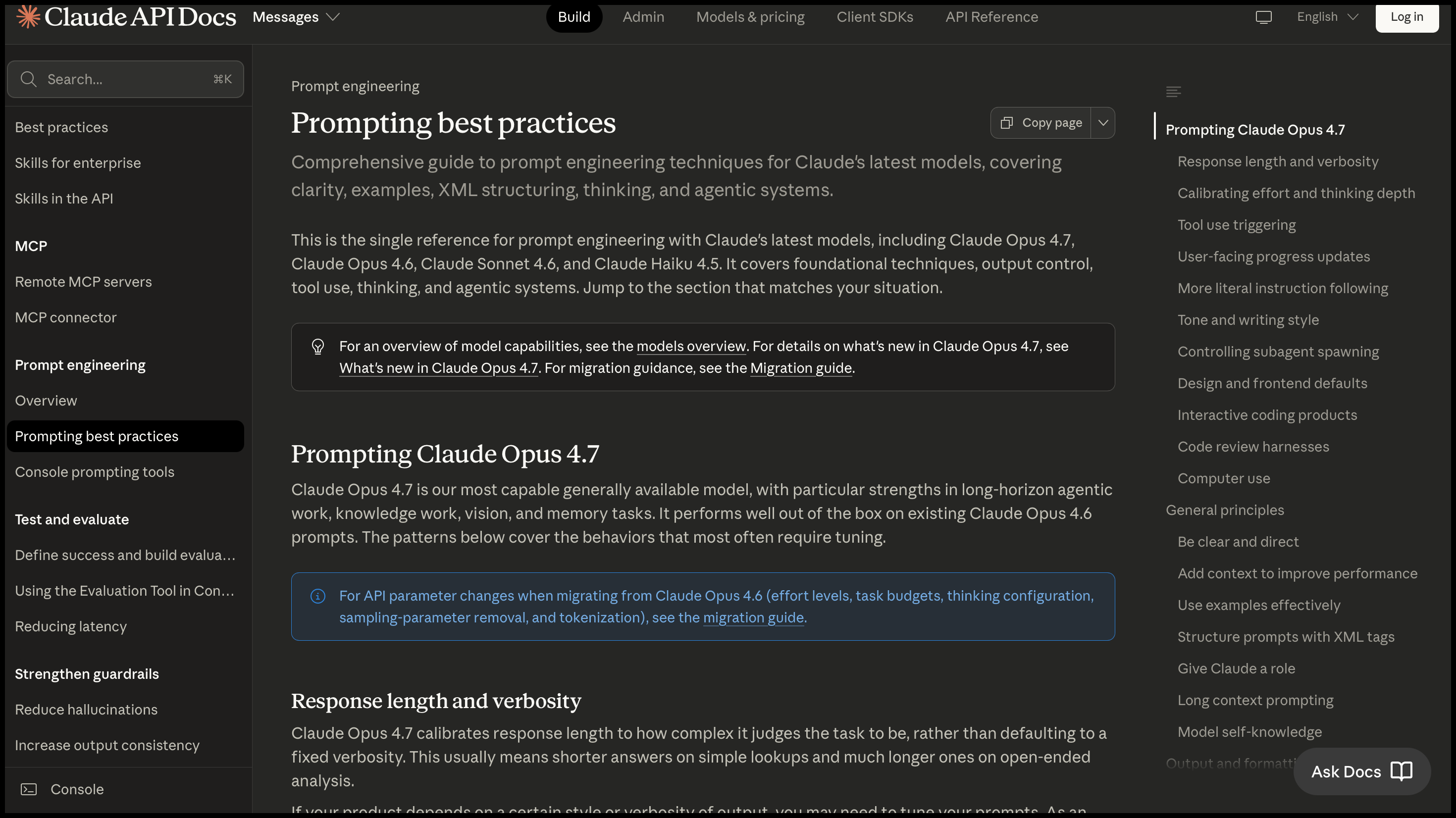
"Prompting best practices" by Anthropic
Next step, specialty knowledge:
Specifically by Anthropic for Claude, this is an in-depth guide for how to prompt their model correctly to generate useful code along with how to tune the model’s output as much as possible.
Whenever you are using LLMs, they all have specific differences.
For example, in this guide they suggest placing long-form data near the top of your prompt. This will noticeably increase the performance across all their models.
The guide itself is deep and goes through topics in a way that assumes you already know and understand the topics from the previous guides.
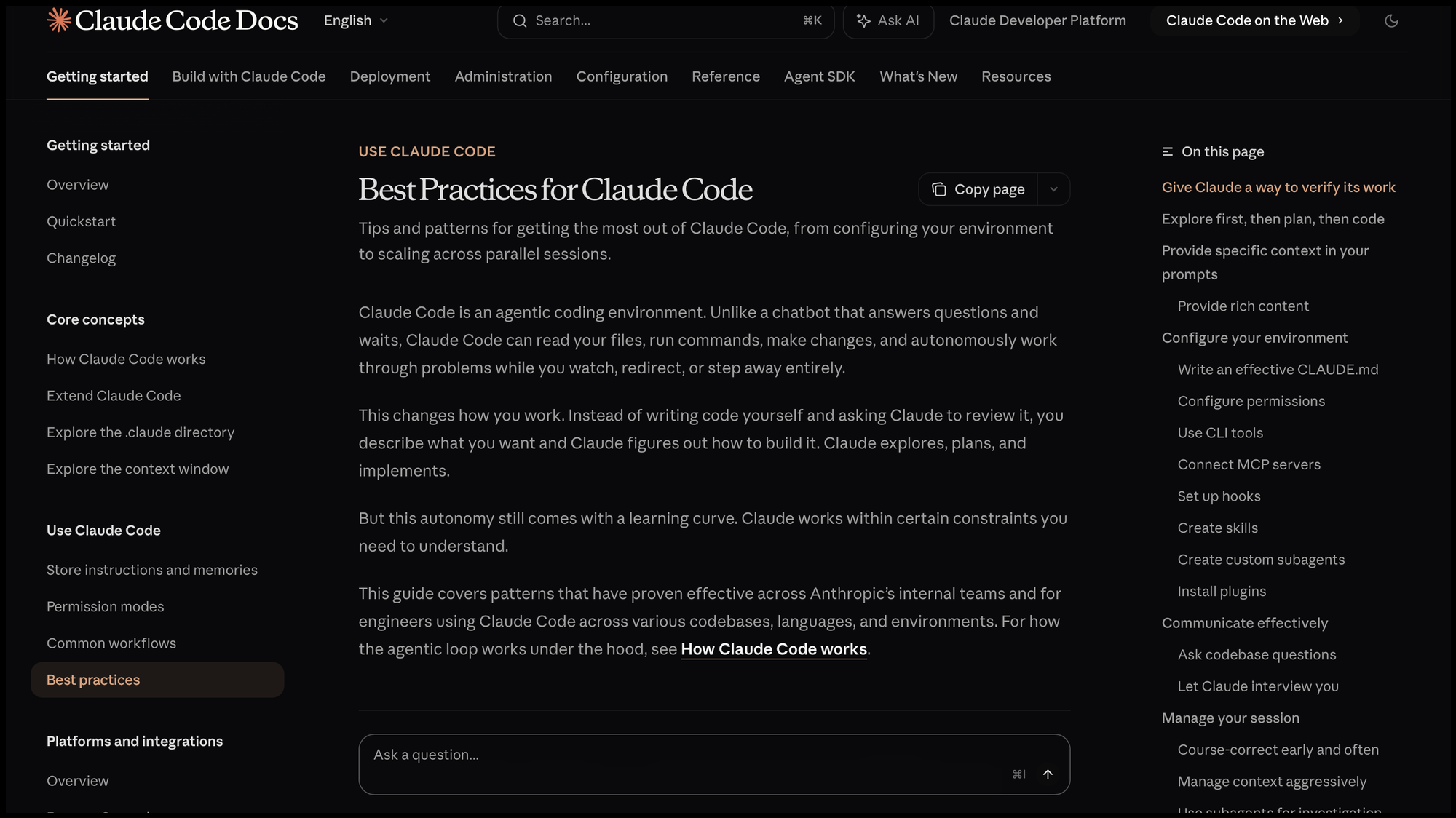
"Best Practices for Claude Code" by Anthropic
https://code.claude.com/docs/en/best-practices
Personalise your workspace and prompts:
This guide goes through how to personalise your Claude AI, goes through its weaknesses and how to manage the performance of your Claude AI and its tokens.
It also gives you a guide on how to use its features, like when to use the planning mode and when to use the edit mode.
It’s important to go through this guide since personalising your tools and creating your own workflow makes you a lot more valuable.
Make your AI work with you and your habits as much as possible.
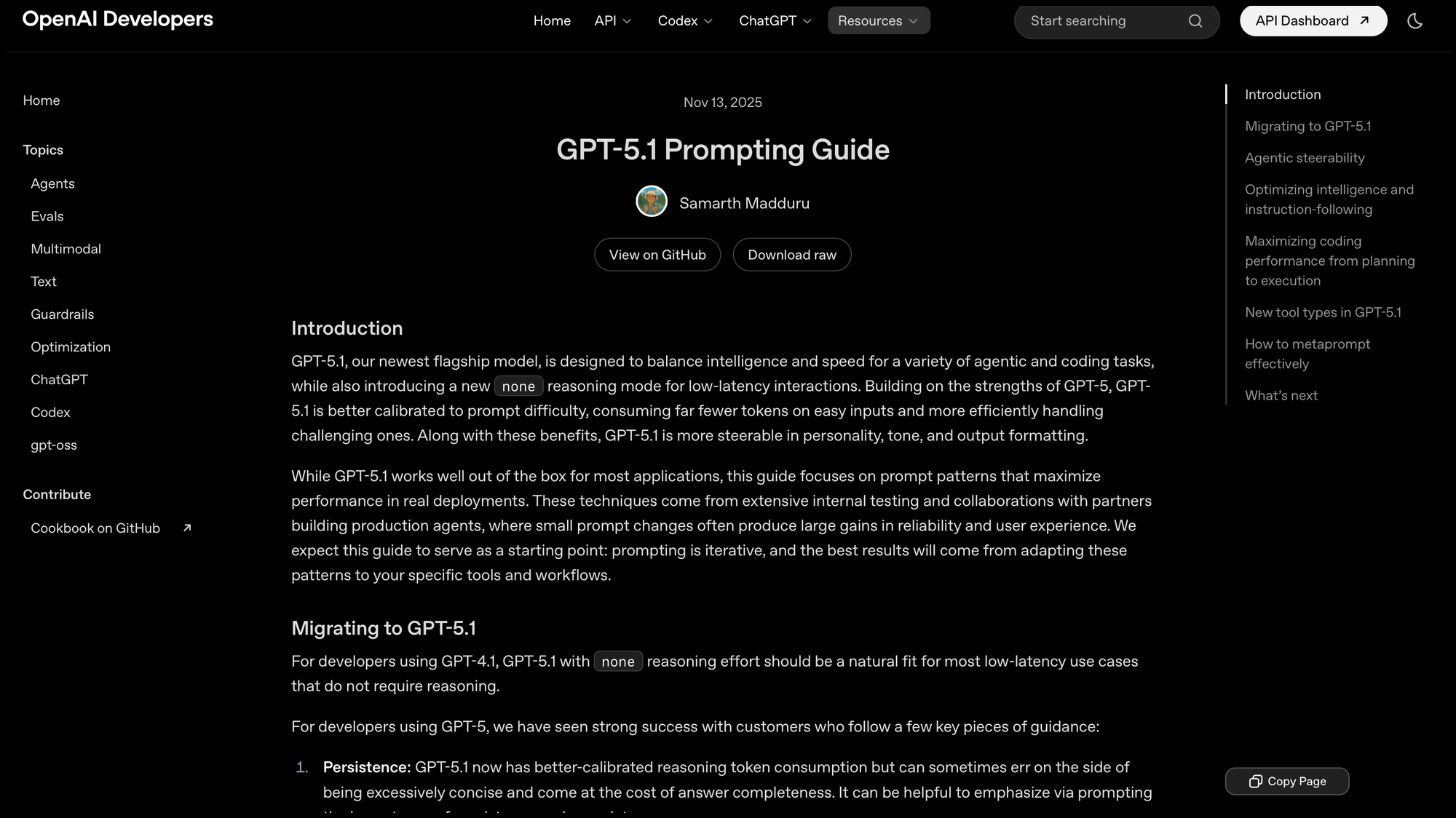
"GPT 5.1 Prompting Guide" by OpenAI
https://developers.openai.com/cookbook/examples/gpt-5/gpt-5-1_prompting_guide
OpenAI's guide to their LLM:
Specifically for GPT 5.1, this guide tells you more about the specifics about working with the latest ChatGPT models.
It's a pretty deep guide, and assumes you already understand LLMs and are practiced with using them.
Reading through this guide will make you more learned using prompt engineering techniques with ChatGPT, Codex and the current model, GPT 5.1.
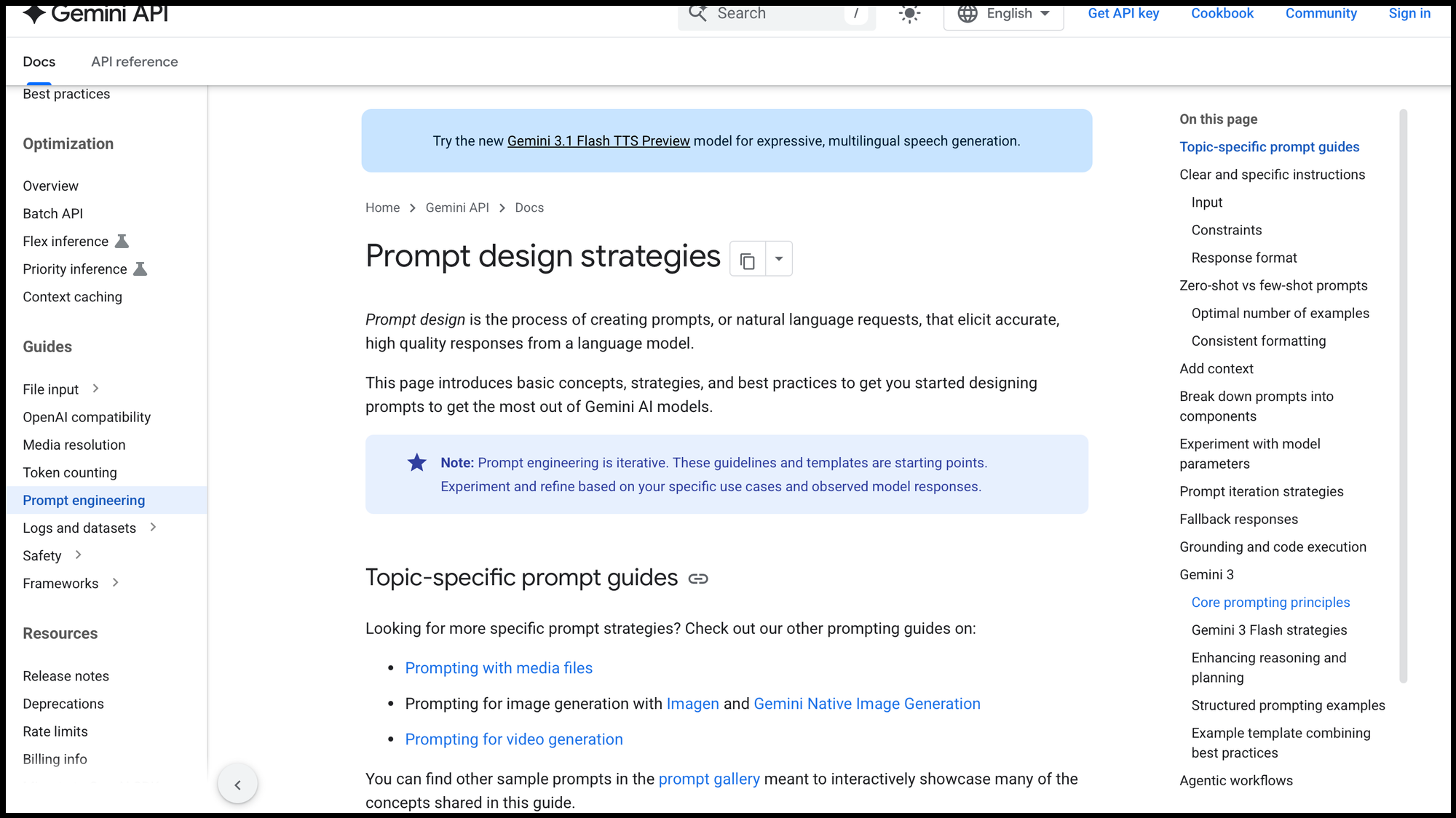
"Design strategies | Gemini API" by Google
https://ai.google.dev/gemini-api/docs/prompting-strategies
Gemini's guide to their LLM:
For Gemini AI models, this is their in-depth guide.
I suggest using this to practice prompt engineering with Gemini.
Gemini is a bit different compared to ChatGPT and Claude because it's optimised for structured and visual text, like PDFs and Research Papers.
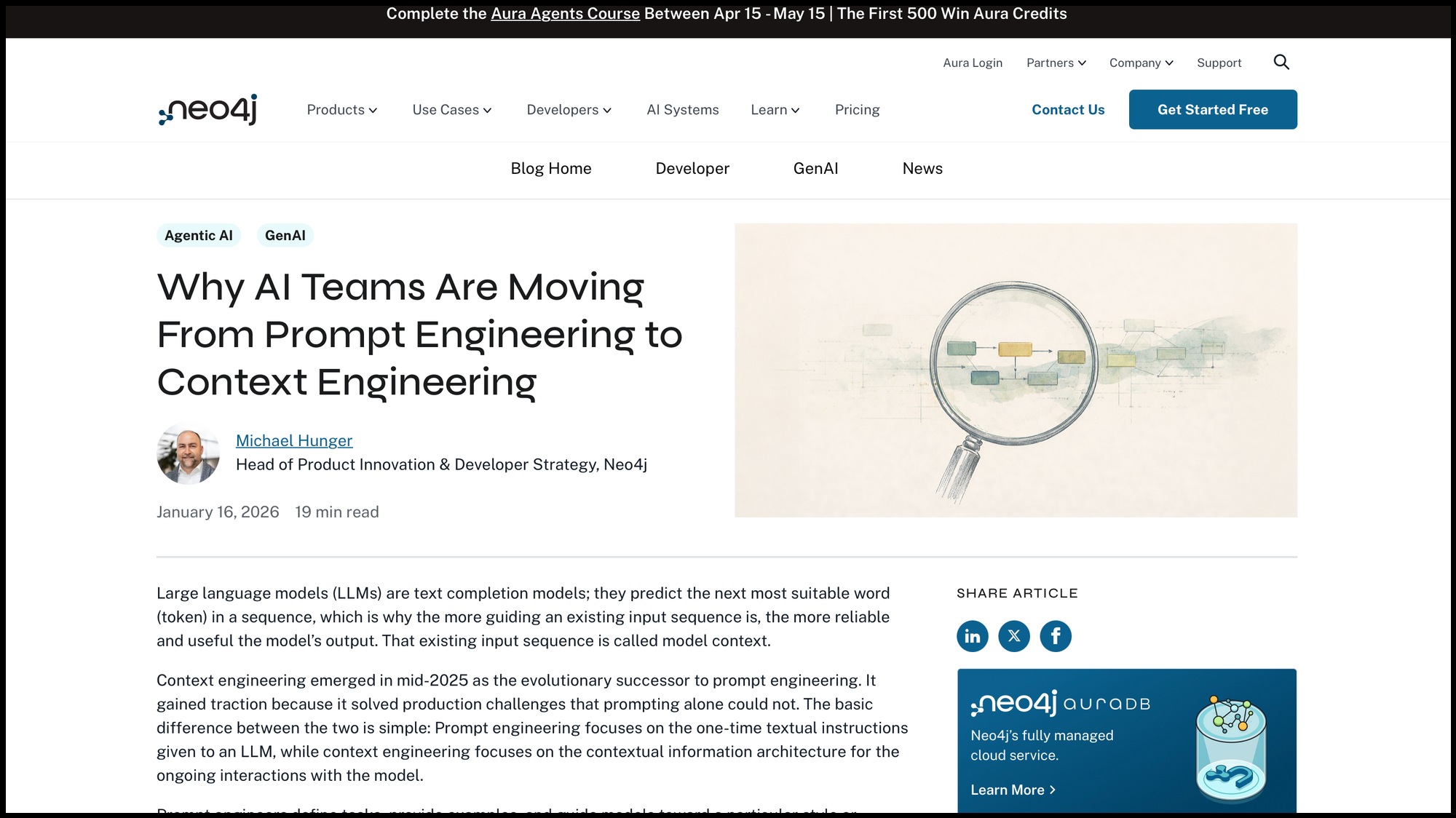
Why AI Teams Are Moving From Prompt Engineering to Context Engineering
https://neo4j.com/blog/agentic-ai/context-engineering-vs-prompt-engineering/
Dip your toes into context engineering:
When you have prompt engineering skills and are relatively comfortable with prompts, context engineering is the natural next step.
This article goes through the differences between prompt engineering and context engineering.
Prompt engineering has specific weaknesses that you should be well acquainted with, like remembering, retrieving and acting in multiple steps with changing context.
Context engineering will give you more control over the LLM’s actual capabilities.
This article is a good primer to get you started.